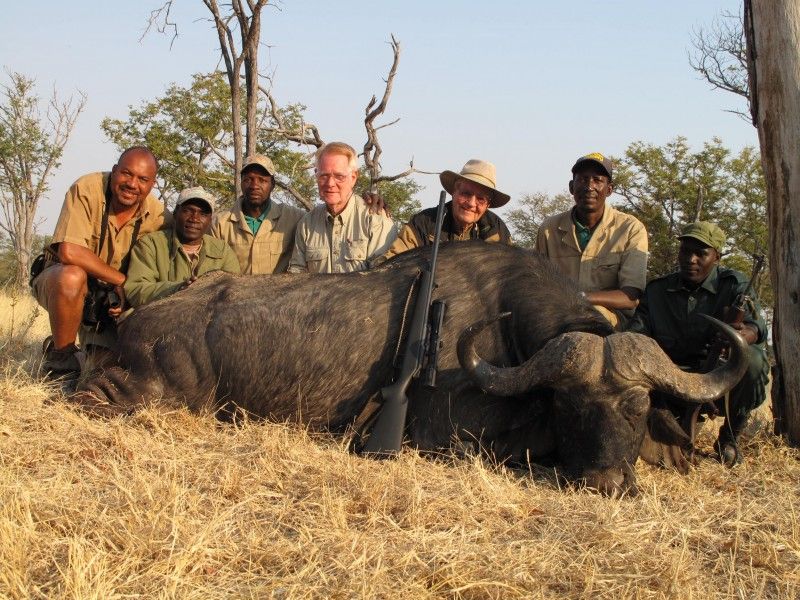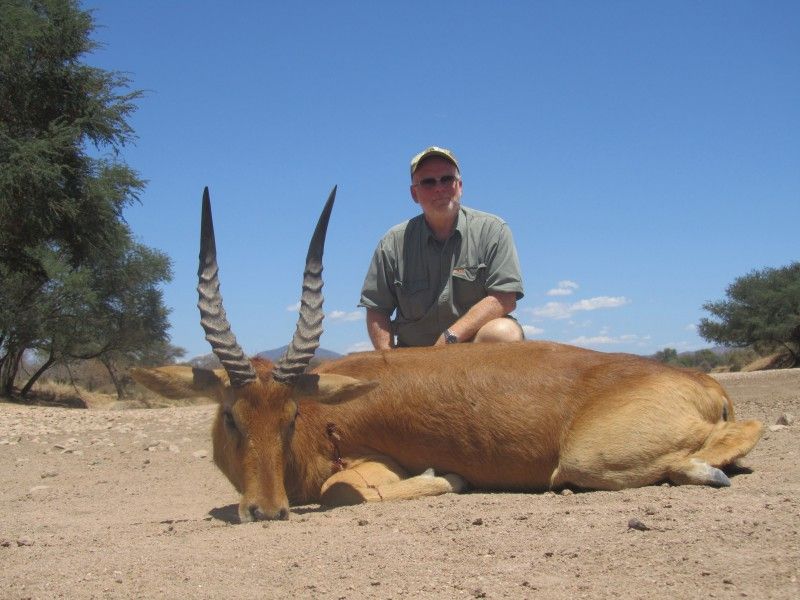

Big Game Hunt in Zambia
Our partner in Zambia currently has hunting rights to some of the best hunting areas in Zambia, and the area provides large amounts of trophies to hunters. Are you dreaming of a great hunt in the "real" Africa? Then this trip is for you

Highlights
- Partner has hunting rights to some of the best hunting areas in Zambia
- Unique opportunity to hunt more special and exciting species
- Zambia is best known for the excellent numbers of lions, elephants, leopards and buffaloes


7 days from $13,995
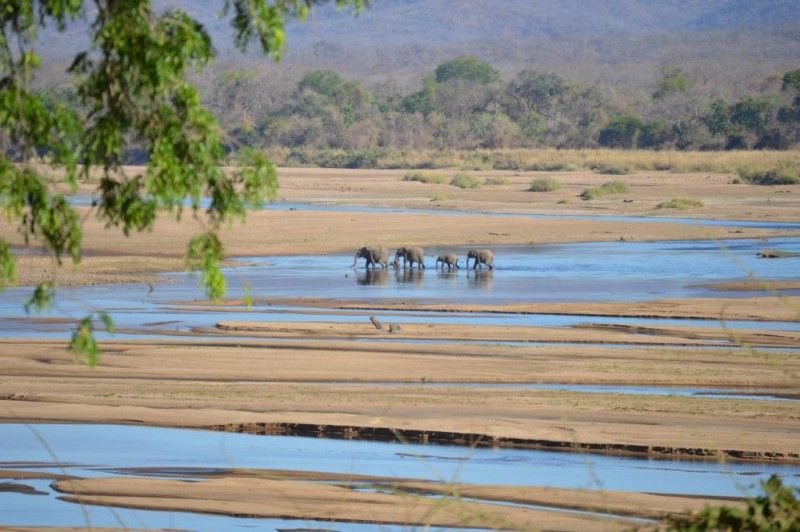
Kwalata Safaris offers exceptional big and plains game hunting in some of Zambia’s most sought-after wilderness areas. The Lower Lupande concession, recognized as one of the country’s leading hunting destinations, borders the iconic South Luangwa National Park and stretches across more than 50 km of pristine river landscape—an outstanding setting for an authentic African safari.
Hunting in Zambia
Hunting in Zambia offers a classic African safari experience in some of the continent’s most untouched and game-rich areas. Hunting primarily takes place in large, open concessions, where it is conducted as true fair chase on foot through varied terrain of bush, floodplains, and dense vegetation.
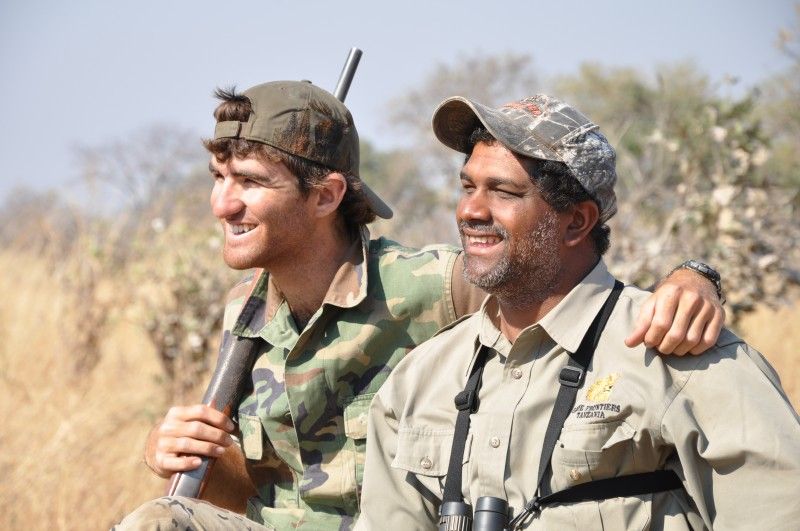
Zambia is especially known for its strong buffalo populations, as well as excellent opportunities for a variety of antelope species, and in select areas, leopard and other big game. Hunting is carried out in the traditional “walk and stalk” style, where, together with a professional hunter (PH) and experienced trackers, game is followed on fresh spoor—an intense and authentic form of hunting that often involves covering many kilometers each day.
Areas such as the Lower Lupande Game Management Area are known for high game density and exciting hunting, offering close encounters with Africa’s wildlife.
Zambia is particularly suited to hunters seeking a true wilderness experience with a focus on quality, excitement, and classic safari rather than comfort and luxury.
Travel
Travel to Zambia is by international flight to the capital Lusaka, which serves as the gateway to the country’s safari areas.
Upon arrival, guests are met by Kwalata Safaris, ensuring a smooth and secure start to the trip. Depending on arrival time, an overnight stay in Lusaka is typically included, allowing time to rest after travel and review practical matters such as firearm documentation and the hunting plan.
The journey then continues to the hunting area—either by domestic flight or by road, depending on the location. For hunts in the Lower Lupande area in the Luangwa Valley, travel is usually by domestic flight to Mfuwe, followed by a short drive to camp. Alternatively, some areas can be reached directly by road from Lusaka.
Upon arrival at camp, guests are welcomed by their professional hunter (PH) and the team, followed by a detailed briefing on the hunt and stay. Hunting typically begins the following day.
The entire journey is well organized from start to finish, with all local transfers and logistics handled, allowing the hunter to focus fully on the experience.
Accommodation
With a strong commitment to quality, Kwalata Safaris combines luxury, safety, and expertise to create an unforgettable hunting experience. Guests can choose between two camps: Tundwe, a permanently built brick-and-thatch lodge, or Kwalata, a semi-permanent tented camp. Both offer modern comfort with spacious facilities, two queen-size beds, en-suite bathrooms, and carefully selected interiors in harmony with nature.
From arrival to departure, Kwalata Safaris ensures that every detail is handled professionally, allowing guests to focus entirely on the pursuit of mature, top-quality trophies.
Conservation and Community
Conservation is a core part of Kwalata Safaris’ operations. Through close cooperation with authorities, regular anti-poaching patrols, and trained scouts, the area is actively protected—resulting in growing game populations and improved trophy quality.
Commitment to the local community is equally important. Initiatives such as access to clean water, support for schools and clinics, and the sharing of 50% of harvested game contribute to local development and strengthen conservation efforts.
All hunting activities are conducted in accordance with regulations set by the Department of National Parks and Wildlife and are based on ethical and sustainable principles.
Kwalata Safaris stands for responsible hunting, strong partnerships, and deep respect for nature.


Hunting Area

Bangweulu Swamp
Zambezi Sitatunga and Black Lechwe These safaris take place in the Bangweulu Game Management Area; most often referred to as the Bangweulu swamp. It is located in North Central Zambia. The reason for traveling to this area is to hunt the Black Lechwe, Zambezi Sitatunga, Tsessebe, Reedbuck and Oribi. This is the only place in Africa that the Black Lechwe is totally wild and free ranging. They...
Read more
Illinda Area
Sitatunga and Sable This area is approximately 110,000 acres in size and located in the Northwest of Zambia along the west boundary of the Kafue National Park. Also joining Kasowso Busanga and Lunga Busanga G.M.A.’s. The two strong points of this area are Zambezi Sitatunga and Sable. Also found here are Bushpig, Bushbuck, Duiker, Grysbok, Kudu, Lichtenstein’s Hartebeest, Oribi and...
Read more
Kafue Flats
Kafue Lechwe Most of these safaris are conducted as follows: Our hunters arrive in Lusaka the afternoon prior to their hunt. Our staff will meet you upon arrival and escort you to the hotel of your choice or the hotel of our office staff’s choice. Early the next morning our professional hunter and his trackers will pick you up and drive you to Lochinvar/The Kafue Flats (the only place on...
Read more
Lower Lupande Game Management Area (G.M.A.)
Located in the South Luangwa Valley sharing approximately 70 kilometers of boundary with the South Luangwa National Park and the Luangwa River. This area is reached by road and by plane. The preferred method of travel to reach Lower Lupande is by daily commercial flights from Lusaka to MFuwe Airport. This is a one hour flight and costs approximately $600.00 per person round trip (price is subject...
Read more
MuFunta Area
Sable Heaven This giant area of approximately 2, 200 square kilometers is located in the far west of Zambia. We often refer to it as the “wild, wild west” with its Eastern boundary bordering the Kafue National Park, its Northern boundary being Kasowso Busanga G.M.A. and its Southern boundary being Bill Bill and Mulobezi G.M.A.’s. Wes’ thoughts and reflections, “This...
Read more
Mwanya Game Management Area
Mwanya, pronounced “Wanya,” is north of Lupande in the Luangwa Valley. This area shares its west boundary with the South Luangwa National Park and its east boundary with the Lukusuzi National Park, encompassing approximately 1,500 square kilometers. This area can be reached by road and by plane. The preferred method of travel to/from Mwanya is by daily commercial flights from Lusaka...
Read more
Nyamvu Game Reserve
This private hunting area of approximately 350 square kilometers is located in the Luangwa Valley neighboring West Petauke G.M.A., the Muchinga Escarpment and the life giving Luangwa River. Considering how remote this area is, the camp is beautiful and fully modern with hot and cold running water, flush toilets, generated and solar electricity, electric and gas refrigerators, WiFi and cellular...
Read more
West Petauke Game Management Area
Located in the Southern tip of the Luangwa Valley, encompassing more than 1,000 square kilometers with its Eastern boundary being much of the Luangwa River. The following species of animals are encountered here: Cape Buffalo, Chobe Bushbuck, Crocodile, Duiker, Elephant, Grysbok, Hyena, Hartebeest, Hippo, Impala, Kudu, Leopard, Lion, Puku, Roan, Waterbuck and Warthog. The main camp is built on...
Read morePartner

Kwalata Safaris
Kwalata Safaris with Peter Chipman and Sarge Karim have now been helping make our demanding safari clients’ wildest Africa-dreams come true for 9 seasons. The combination of outstanding hunting districts and highly professional personnel has resulted in our clients shooting many excellent trophies. We have had a good number “repeat customers” who have hunted with this...
Read moreGame
Baboon
Scientific Name: Papio sp. Sub-species: Five species are currently recognised (this is some disagreement on whether they are true separate species or sub-species. The true number of sub-species is also currently unknown) Hamadryas baboon (P. hamadryas) - Horn of AfricaGuinea baboon (P. papio) - Far western AfricaOlive baboon (P. anubis)- north central african savannahYellow baboon (P....
Read more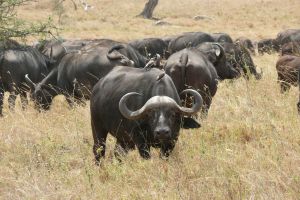
Buffalo, Cape
Videnskabeligt navn: Syncerus caffer Underarter: Dværgbøffel (Cyncerus c. nanus), Savannebøffel (Cyncerus c. S. c. brachyceros ), Nilbøffel (Syncerus caffer aequinoctialis). Cafferbøffel (Cyncerus caffer caffer Udbredelse: Nilbøflen er den af de fire arter der har det nordligste udbredelsesområde: Fra Senegal i vest i et bredt...
Read more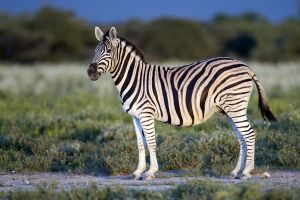
Burchell's Zebra
Videnskabeligt navn: Equus burchelli Underarter: Grant's Zebra (E.b. böhmi) Chapman's Zebra (E.b.antiquorum) Udbredelse: Burchell's Zebra: Botswana og Sydafrika. (den ægte burchell's zebra er uddød). Grant's Zebra: Mozambique, Tanzania, Kenya, Uganda og Ethiopien. Chapman's Zebra: Sydafrika, Mozambique, Zimbabwe, Botswana, Namibia, Angola, Zambia. Levested: Åben bush og...
Read more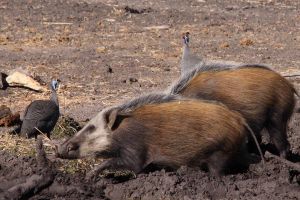
Bush Pig
Scientific Name: Potamochoerus porcus Subspecies: Up to 18 recognised species, here described as one. Distribution: All of Africa south of the Sahara Desert, excepting the desert of Namibia. Habitat: High forest, their fringes and thick bush country, often near rivers. Frequents fields where they cause much damage. Description: A domestic pig-like animal, weighing around 100 kg and measuring...
Read more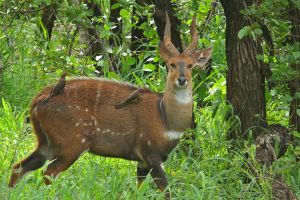
Bushbuck, Cape
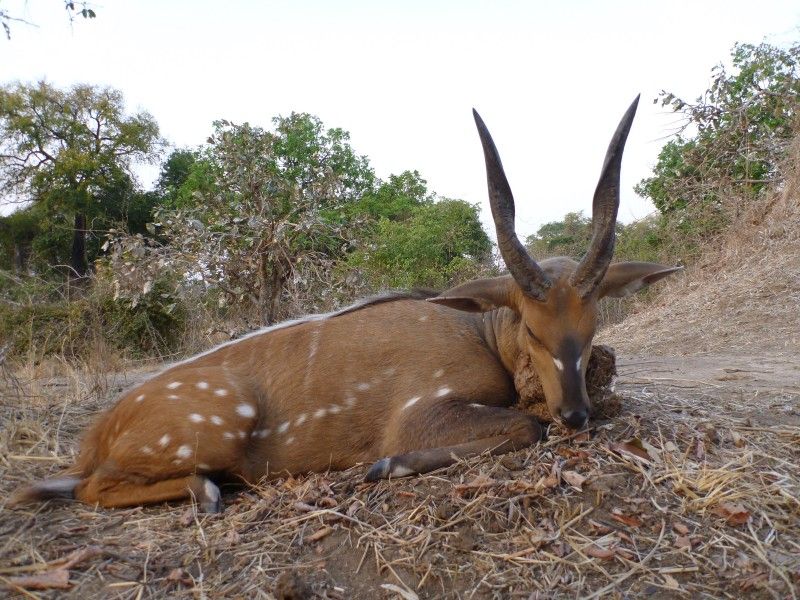
Scientific Name: Tragelaphus Scriptus Subspecies: Science dissagree as to how many species there are. We have chosen to include those most relevant to trophy hunters: Tragelaphus s. ornatus, Tragelaphus s. massaicus, Tragelaphus s. sylvaticus. Distribution: Tragelaphus s. scriptus: The West African States Tragelaphus s. ornatus: Zimbabwe, Zambia, Zaire and East Angola Tragelaphus s. massaicus:...
Read more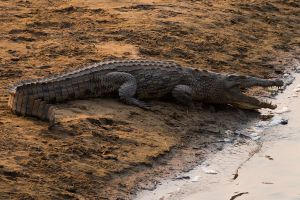
Crocodile, Nile
Scientific Name: Crocodylus niloticus Subspecies: No subspecies are currently formally recognised, however up to seven have been proposed. Distribution: The most common African crocodile, present over much of the sub-Saharan Africa from Lake Nasser in Egypt and the River Nile Sudan to the north to the Okavango Delta of Botswana and the Olifants River of South Africa in the...
Read more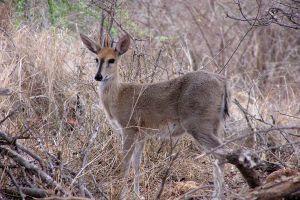
Duiker, Grey/Duiker, Grimm's (Common)
Scientific Name: Sylvicapra Grimmia Subspecies: Classification of subspecies is very variable, we have chosen only to count two: Western Bush Duiker and East African Bush Duiker. Distribution: From the desert rim in Northern Africa to the Southern tip of the Continent, the West African rainforest excepted. Habitat: As the species is a typical bush duiker it lives, as the name suggests in...
Read more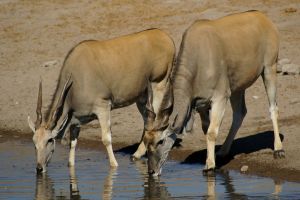
Eland, Cape/Livingstone, Patterson's
Scientific Name: Taurotragus oryx livingstoneiSubspecies: SCI lists Cape Eland as Tragelaphus oryx with three subspecies, which means that SCI counts the Cape Eland with the spiral horned antelopes. We have chosen to list Cape Eland under it's scientific name Taurotragus with two subspecies: Livingstone's Eland (Taurotragus oryz livingstonei) East African Eland (Taurotragus o....
Read more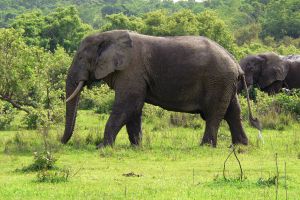
Elephant (Africa)
Videnskabeligt navn: Loxodonta afrikana Underarter: Forest Elephant (Loxodonta a. cyklotis) Pygmy Elephant (Loxodonta a. pumilio) Udbredelse: De tre arters samlede udbredelsesområde: Hele Afrika syd for Sahara. Dog bør det nævnes at i Vestafrika lever elefanterne i dag i små isolerede bestande, og først fra Cameroun og østover kan man tale om...
Read more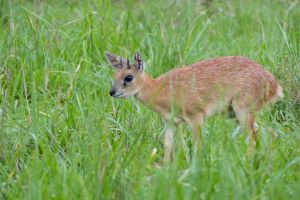
Grysbuck, Sharpe's
Videnskabeligt navn: Raphicerus sharpei Underarter: Ingen. Udbredelse: Zimbabwe, Zambia, den nordøstlige del af Sydafrika, Mozambique, Tanzania. Levested: Tæt bush og høje græsbevoksninger. Beskrivelse: Lille antilope med en vægt på 8 - 12 kg og en skulderhøjde, der normalt ikke overstiger 50 cm. Grysbucken er gråbrun med hvide aftegninger...
Read more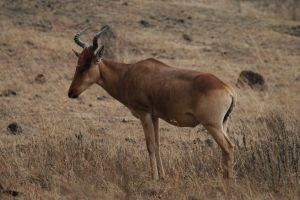
Hartebeest, Lichtensteins
Videnskabeligt navn: Alcelaphus b lichtensteini Underarter: Er selv en underart af Alcelaphus buselaphus Udbredelse: Tanzania, Congo, Mozambique, Zambia, Zimbabwe og Angola. Levested: Åben bush og græssletter. Beskrivelse: Mellemstor antilope, der vejer ca. 170 kg og måler 120 - 140 cm over skuldrene. Skindfarven er lys brun. Hornene der er de mindst kraftige hos...
Read more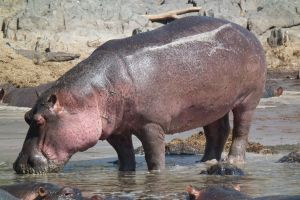
Hippopotamus
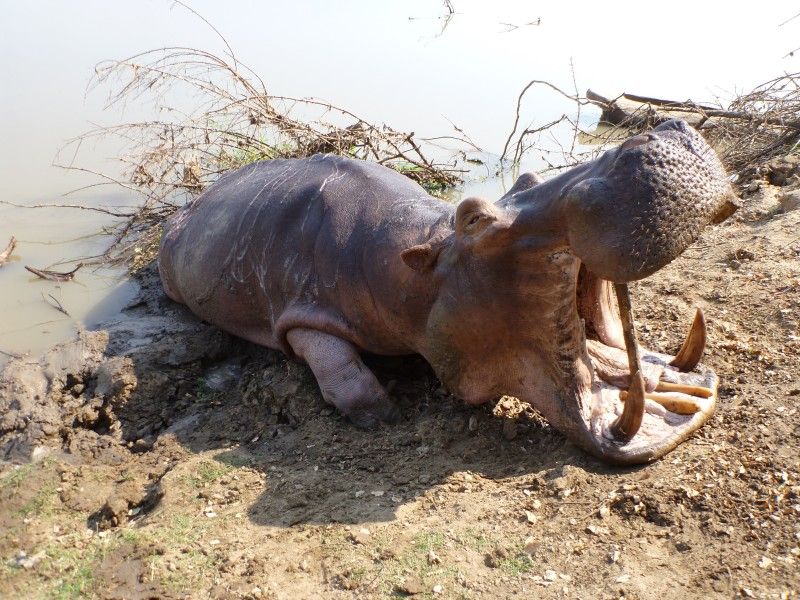
Videnskabeligt navn: Hippopotamus amphibius Underarter: Ingen. Udbredelse: I stort set samtlige lande syd for Sahara. Levested: Langs floder og i søer. Beskrivelse: Flodhesten er næst efter elefanten det største landlevende pattedyr. Flodhesten har en kompakt krop og korte kraftige ben. Den opnår en vægt på op til 3,5 tons og en højde på 1,5...
Read more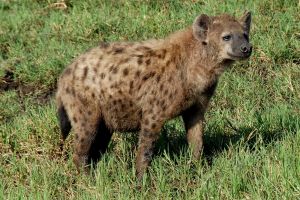
Hyena, Spotted
Videnskabeligt navn: Crocuta crocuta Underarter: Ingen. Udbredelse: Det meste af Afrika med udtagelse af den vestafrikanske regnskov og Sydafrika. Levested: Åben bush og græssletter. Beskrivelse: Mellemstort hundelignende dyr med kompakt krop og kraftige ben. Den opnår en vægt på ca. 70 kg og en højde på 80 cm målt over skuldrene. Hovedet er...
Read more
Impala
Scientific Name: Aepyceros melampus Subspecies: East African Impala (Aepyceros m. rendillis) Angola Impala (Aepyceros m. petersi) Distribution: South Africa, Mozambique, Zimbabwe, Botswana, Namibia, Angola, Zambia, Tanzania, Kenya, Uganda and Congo (Zaire) Habitat: Open bush and Acacia savanna Description: The three species are here descriped as on as the difference in appearance is negligent...
Read more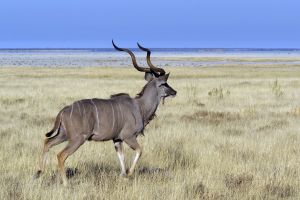
Kudu, Greater
Scientific Name: Tragelaphus strepsiceros Subspecies: Southern Greater Kudu (Tragelaphus strepsiceros strepsiceros) East African Greater Kudu (Tragelaphus str. bea). Western Greater Kudu (Tragelaphus str. cottoni) Distribution: From Chad, Sudan and Ethiopia in the North through all countries along the East coast as well as Zimbabwe, Zambia, Namibia, Botswana, Angola and South Africa. Habitat:...
Read more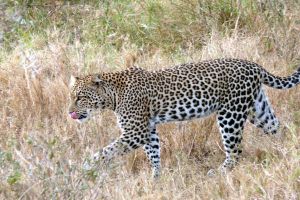
Leopard (Africa)
Videnskabeligt navn: Panthera pardus Underarter: Ingen Udbredelse: Hele Afrika syd for Sahara. Levested: Alle typer af terræn (selv udkanten af boligområder). Beskrivelse: Mellemstort dyr af kattefamilien med kompakt krop og kraftige ben. Leoparden kan opnå en vægt på 60 - 90 kg og en højde på ca. 70 cm. Skindet er gyldent med sorte ringe. Leoparden...
Read more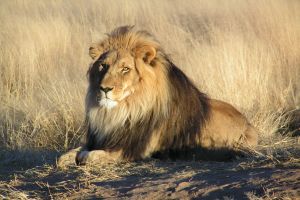
Lion (Africa)
Videnskabeligt navn: Panthera leo Underarter: Der anerkendes op til 7 geografiske underarter af løve. De beskrives her alle under et. Udbredelse: De forskellige løveunderarter har et fælles udbredelsesområde, der strækker sig fra Senegal i vest til Ethiopien og Somalia i øst samt i et bredt bælte langs Afrikas østkyst til det nordlige...
Read more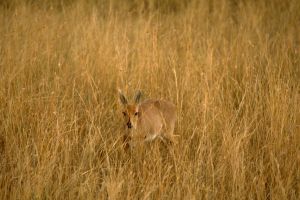
Oribi
Videnskabeligt navn: Ourebia ourebi Underarter: Der anerkendes op til 13 underarter. Den eneste underart, der adskiller sig tydeligt fra de andre er Haggard Oribien Udbredelse: Sydafrika, Mozambique, Zimbabwe, Botswana, Namibia (Caprivi), Angola, Zambia, Tanzania, Kenya, Somalia, Sudan, Chad, C.A.R, Cameroun, samtlige vestafrikanske stater til Senegal. Levested: Åben bush og...
Read more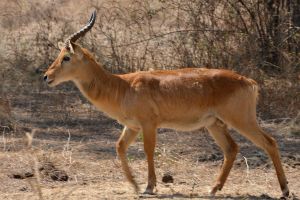
Puku
Scientific Name: Kobus vardoni Subspecies: None Distribution: Zambia, Tanzania and Angola. Habitat: Open flats bordering marsches or river banks, never far from water. Description: Middlesized antelope that reaches a weight of 90 kg and a shoulder height of 70 - 80 cm. General colour bright golden yellow with white markings over the eyes and on the neck. The horns are reminiscent of the...
Read more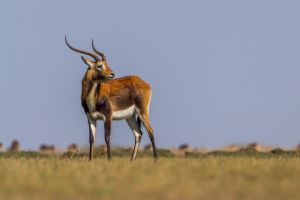
Red Lechwe/Black Lechwe/Kafue Lechwe/Moor Antilope
Scientific Name: Kobus leche Subspecies: Kafue Lechwe (Kobus l. kafuensis) Black Leckwe (Kobus l. Smithemani) Distribution: Lechwe: Botswana, Namibia, Zambia and Angola Kafue Leckwe: Zambia and Congo (Zaire) Black Lechwe: Zambia (Bangweolo swamps) Habitat: Swamps and wetlands (see Sitatunga) Description: The tree species will be described as one as the difference between them is negligent:...
Read more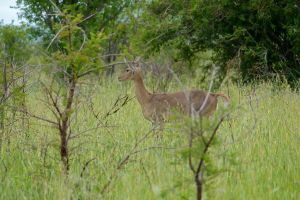
Reedbuck (Common)
Scientific Name: Redunca arundinum Subspecies: None Distribution: Angola, Southern part of Congo, Southern Tanzania, Zambia, Mozambique, Zimbabwe, Botswana, Namibia (Caprivi) and South Africa. Habitat: Open bush and savanna Description: Middlesized antelope with a shoulderheight of up to 100 cm and a weight of 70 - 80 kg. General colour uniform greyish fawn, tinged with brown, with a white...
Read more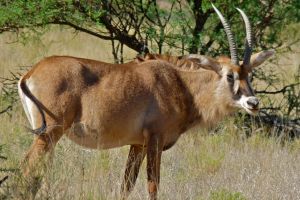
Roan
Videnskabeligt navn: Hippotragus equinus Underarter: Der anerkendes 6 underarter men vi har valgt kun at medtage de arter der er tilgænglige for trofæjægere idag. East African Roan (Hippotragus e. langheldi) Western Roan (Hippotragus e. koba) Udbredelse: Southern Roan: Sydafrika, Mozambique, Zimbabwe, Zambia og Botswana. East African Roan: Tanzania, Kenya. Western Roan: Fra de...
Read more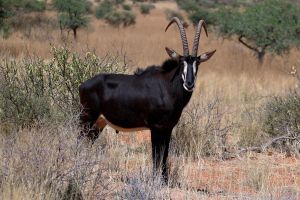
Sable Antelope (Africa)
Videnskabeligt navn: Hippotragus niger Underarter: Hippotragus n. kirkii, Hippotragus n. roosevelti. Giant Sable (Hippotragus n. Variani) beskrives ikke da den på nuværende tidspunkt er truet af udryddelse. Udbredelse: Sydafrika, Mozambique, Zimbabwe, Zambia Botswana, Namibia, Tanzania og Kenya. Levested: Åben bush og græssletter men findes også ofte i miombo- og...
Read more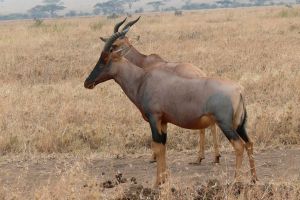
Sassabe
Videnskabeligt navn: Damaliskus lunatus Underarter: Topi (Damaliscus l. jimela) Western Topi, Korrigum (Damaliscus l. purpurescens) Tiang (Damaliscus l. tiang) Udbredelse: Tsesseby: Sydafrika, Mozambique, Zimbabwe, Zambia, Botswana, Namibia, Angola. Topi: Kenya, Tanzania og Uganda. Western Topi: Senegal, Gambia, Burkina Faso, Nigeria, Cameroun, C.A.R, Chad, Sudan. Tiang: Sudan, Ethiopien,...
Read more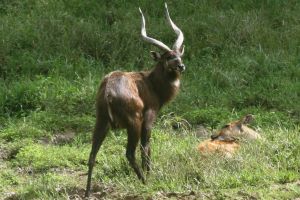
Sitatunga
Scientific Name: Tragelaphus spekei Subspecies: Tragelaphus s gratus, Tragelaphus s. selousi Distribution: Tragelaphus spekei: Kenya, Tanzania and Sudan Tragelaphus s. gratus: Central- and West African rainforests. Tragelaphus s. selousi: Zambia, Namibia, Malawi and South Western Tanzania. Habitat: Confined to swampy areas, mainly papyrus and reedswamps by larger lakes Description:...
Read more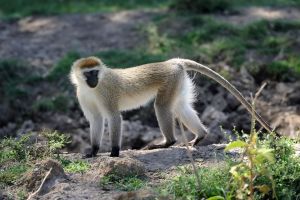
Vervet Monkey
Scientific Name: Chlorocebus pygerythrus Species: There are five recognised subspecies of vervet monkey:Chlorocebus pygerythrus excubitorC. p. hilgerti - found in southern KenyaC. p. nesiotesC. p. pygerythrus found in South Africa, Botswana, Lesotho and SwazilandC. p. rufoviridis found in Uganda and Mozambique Distribution: East Africa for Ethiopia south to South Africa Habitat:...
Read more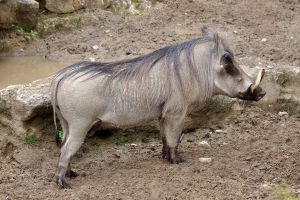
Warthog
Videnskabeligt navn: Phacochoerus aethiopicus Underarter: Der anerkendes op til 7 underarter, der her beskrives under et. Udbredelse: Hele Afrika syd for Sahara med undtagelse af den vestafrikanske regnskov samt ørken områder i Namibia. Levested: Åben bush og græssletter. Beskrivelse: Mindre griselignende dyr der opnår en vægt på 100 kg og en...
Read more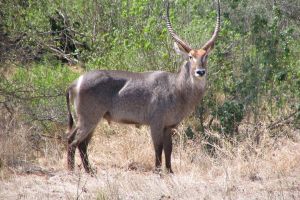
Waterbuck
Videnskabeligt navn: Kobus Defassa Underarter: Common Waterbuck (Kobus d. ellipsiprymnus), Defassa Waterbuck (Kobus d. defassa) Crawshay's Waterbuck (Kobus d. crawshayi). Sing Sing Waterbuck (Kobus d. unctuosus) Udbredelse: Defassa Waterbuck: Kenya, Tanzania, Ethiopien Sudan. Common Waterbuck: Sydafrika, Mozambique, Zimbabwe, Botswana, Zambia, Tanzania, Kenya, Sudan. Crawshay's Waterbuck:...
Read morePrices

The price includes
- Hunting with a professional hunter
- Accommodation in a hunting camp with full board and drinks (non alcoholic)
- Trophy preparation in camp
- Laundry service
- All transport during the hunt
- Concession Fee
- Hunting License (US$ 900)
- Dip & Pack US$ 1.500,-
The price does not include
- Fligths
- Airport taxes
- Car transfers Lusaka – Hunting district US$ 1.000-1.500,-
- If the hunt takes place in Lower Lupande, Charter flght to Mfuwe (US$ 750)
- Trophy fees
- Shipment of trophies home
- Departure tax in Lusaka airport (30 US$)
- Import duty on ammunition. (2 US$/cartridge)
- Gratuities
- Any extra hotel accommodation before or after the hunt in Lusaka
- Travel and cancelation insurance
- EU-public liability insurance US$ 12,00.-
- Everything else not listed under “the price includes”
IMPORTANT
Regardless of whether 7 or 10 hunting days are booked, all desired game species must be requested at the time of booking. Otherwise, we unfortunately cannot guarantee the availability of the requested species.
The hunt should therefore be booked well in advance (approx. 6–12 months prior).
Wounded game = considered as taken game + 16% VAT
Trophy fees are charged for harvested game as well as wounded animals.
Trophy Price List (USD)
| Lion | $44.500 | - | Oribi | $950 |
| Baboon | $250 | - | Reedbuck | $1.300 |
| Chobe bushbuck | $1.200 | - | Bushpig | $950 |
| Buffalo | $4.750 | - | Warthog | $950 |
| Elephant | $17.650 | - | Sable | $8.250 |
| Leopard | $11.750 | - | Roan | $8.250 |
| Crocodile | $3.550 | - | Eland | $5.850 |
| Duiker | $700 | - | Waterbuck com. | $2.000 |
| Grysbok | $950 | - | Zebra | $1.750 |
| Hippo | $4.000 | - | Puku (10 jagtdage) | $1.200 |
| Hyena | $1.200 | - | Sitatunga | $11.750 |
| Hartebeast, Licht. | $1.800 | - | Klipspringer | $1.300 |
| Impala | $600 | - | Tssesebe | $4.000 |
| Kudu | $3.000 | - | Vervet monkey | $250 |
| Tuskless Elephant | $7.600 | Waterbuck def. | $3.500 | |
| Civet / Genet | $1.200 | Red Lechwe | $8.250 | |
| Cookson Wildebeast | $5.300 | Black Lechwe | $6.000 | |
| Kafue Lechwe | OR |